Logan Russell · 27 September 2026
From Seeds to Canopy: How Volunteer Efforts Are Reviving Clearwald's Forests
Clearwald's forests have faced decades of degradation from logging, disease and shifting climate patterns, yet coordinated volunteer programs have shifted the trajectory toward recovery since the early 2020s. Local groups organize year-round activities that range from seed collection in autumn to large-scale planting drives each spring, and these efforts now cover thousands of hectares across the region. Data from regional forestry inventories show increases in native tree density where volunteers have focused their work, while canopy cover measurements recorded by drone surveys indicate steady gains in previously bare patches.
Seed Collection and Nursery Development
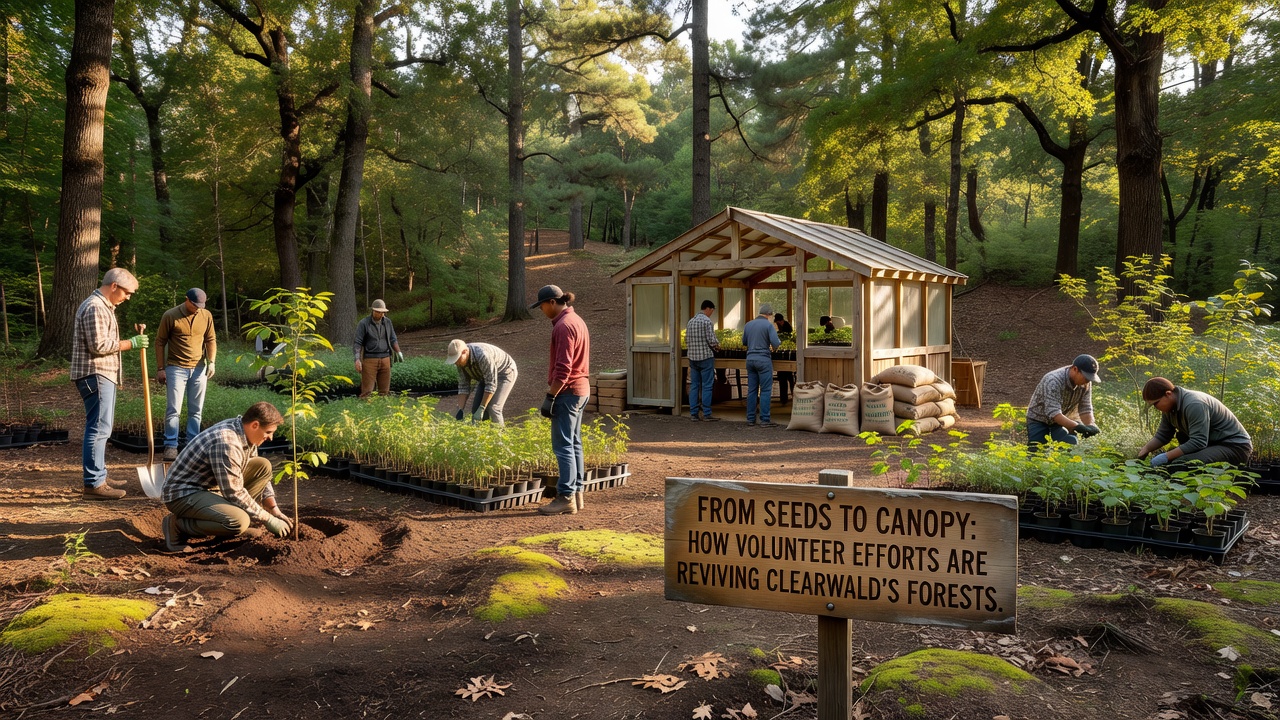
Volunteers begin each cycle by gathering seeds from healthy stands of oak, beech and fir that remain in Clearwald's core zones, and they follow protocols developed by regional forest research stations to ensure genetic diversity. Collection teams work with local rangers during designated windows in September and October, then deliver batches to community-run nurseries that use low-tech greenhouses to start seedlings. By the following March these young trees reach planting size, and distribution networks send them to designated restoration sites where soil has been prepared through volunteer-led clearing of invasive undergrowth.
One project in the eastern sector of Clearwald reported that volunteer-collected seeds achieved germination rates above 65 percent after three seasons of nursery refinement, while comparable commercial stock averaged lower figures according to records kept by the European Environment Agency. Participants track each batch with simple barcodes so researchers can monitor survival once the trees reach the field, and this feedback loop has refined collection techniques over time.
Planting Campaigns and Monitoring
Planting events draw participants from nearby towns adn schools, and organizers divide sites into grids so crews can maintain spacing that supports future canopy closure. In September 2026 a coordinated push across five valleys added more than 40,000 seedlings in a single week, and follow-up counts conducted six months later showed survival rates near 78 percent where volunteers continued weeding and watering during dry spells. Teams also install simple camera traps and soil sensors that transmit data to a shared online platform, allowing anyone to review growth trends without specialized equipment.
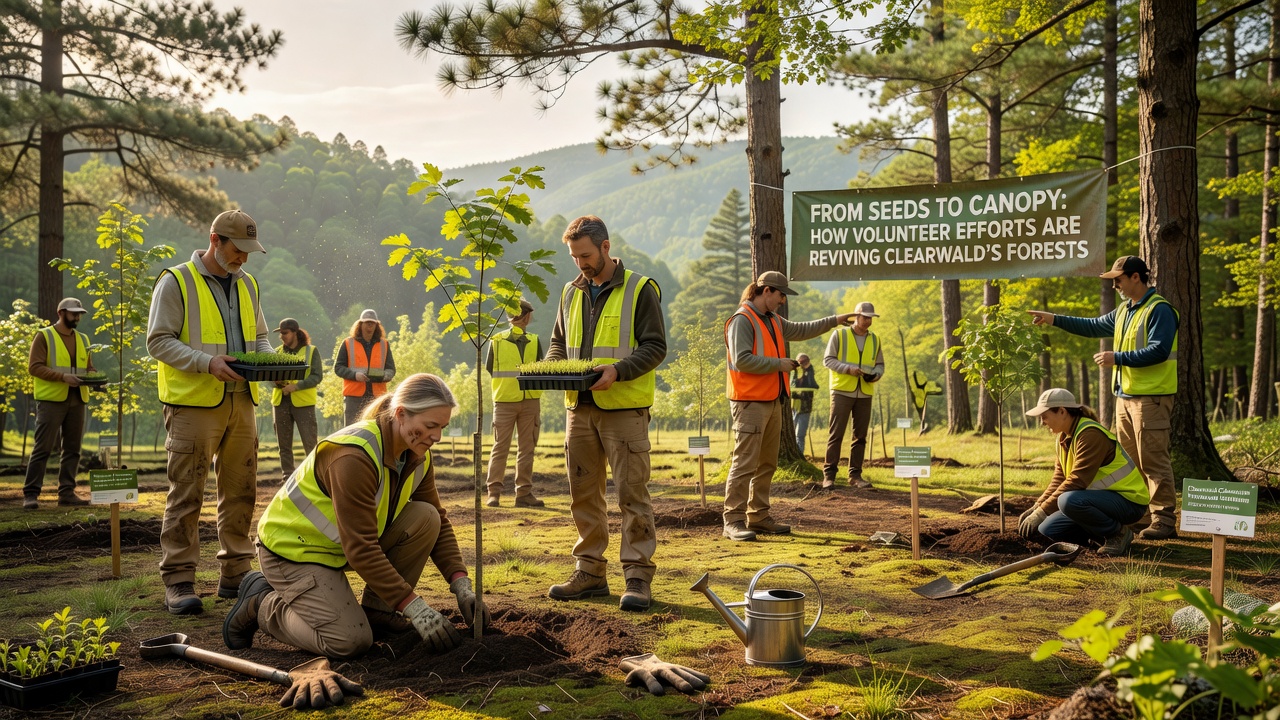
Researchers from several universities have partnered with these volunteer networks to measure biodiversity indicators, and preliminary figures reveal rising populations of soil invertebrates and pollinators in restored zones. These observations align with findings published by the Food and Agriculture Organization of the United Nations, which notes that community-led reforestation often accelerates habitat recovery when combined with consistent aftercare.
Challenges and Adaptive Approaches
Drought periods and browsing pressure from deer remain persistent obstacles, yet volunteers have adapted by installing protective tubes around vulnerable saplings and experimenting with nurse-tree plantings that provide shade. Some crews now incorporate mycorrhizal inoculants during planting to improve root establishment, and trial plots using these methods show faster height gains than untreated controls. Coordination meetings held quarterly allow groups to share what works across different soil types and elevations, and this knowledge exchange keeps practices grounded in local conditions rather than generic templates.
Longer-Term Outcomes
Forest inventories compiled through 2025 document measurable expansion of contiguous canopy in volunteer-managed areas, while adjacent unmanaged zones continue to show slower recovery. Carbon sequestration estimates derived from tree growth models suggest that restored sections now store additional tonnes of carbon per hectare compared with baseline readings from 2018. These gains remain modest on a global scale, yet they demonstrate how sustained local action can rebuild forest structure when scaled across multiple sites.
Conclusion
Volunteer programs in Clearwald continue to link seed collection, nursery care, planting and monitoring into a single cycle that has produced measurable forest recovery. Ongoing data collection through September 2026 and beyond will clarify which techniques deliver the strongest results across varying conditions, and the accumulated records already provide a practical model for other regions facing similar restoration needs. Continued participation from residents and institutions ensures that the transition from scattered seeds to closed canopy stays on track.