Sofia Schmid · 8 November 2026
Beaver Dams Drive Changes in Clearwald Wetlands While Supporting Amphibian Populations
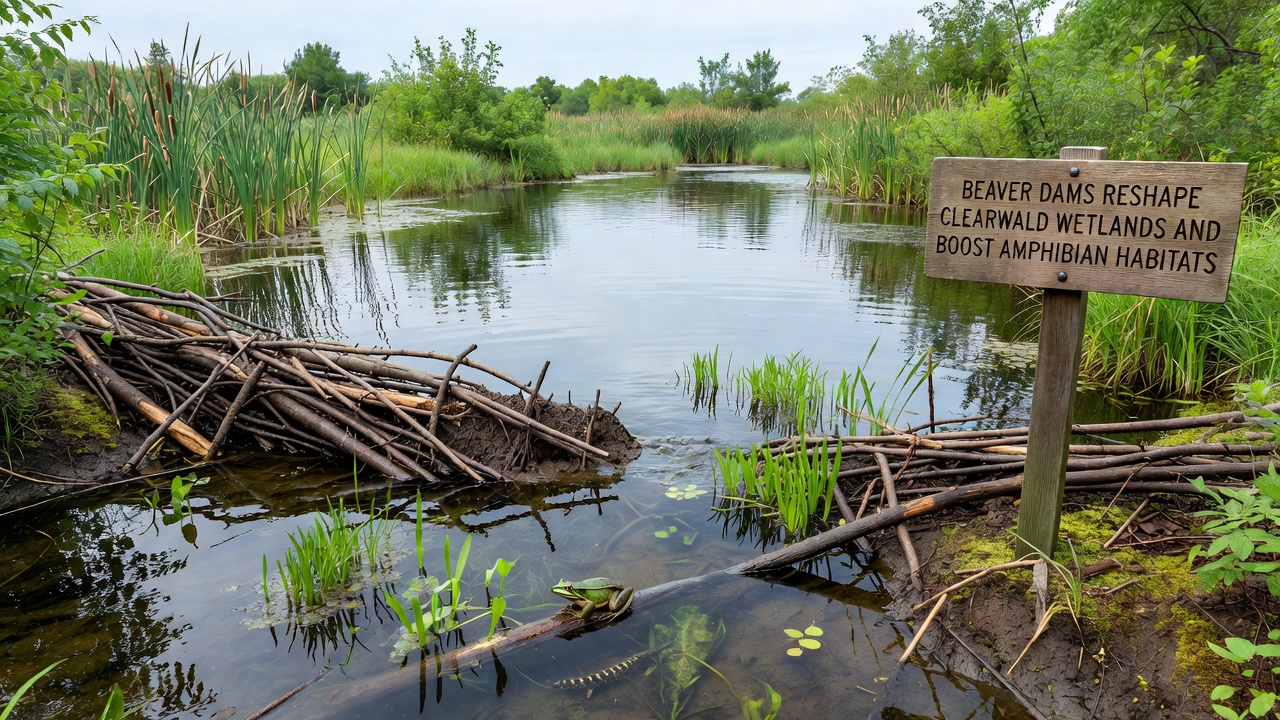
Beaver dams have altered water distribution across sections of the Clearwald wetlands, leading to expanded pond areas and modified stream flows that create varied aquatic environments. Researchers tracking these sites report that the structures slow water movement, raise local water tables, and deposit sediments that support new plant growth along shorelines. These physical changes occur as beavers fell trees and build barriers from branches, mud, and stones, which then trap organic material and reshape the surrounding terrain over multiple seasons.
Mechanics of Dam Construction and Water Retention
Beavers select sites along Clearwald streams where narrow channels allow efficient barrier placement, and the resulting impoundments spread water across low-lying areas that previously drained quickly. Data from field measurements indicate that a single active dam can raise water levels by several feet, flooding adjacent meadows and forming shallow pools that persist through dry periods. Sediment accumulation behind these dams builds up nutrient-rich layers, while overflow channels prevent complete stagnation and maintain some oxygen circulation in the water column.
Observers note that repeated dam maintenance by beaver colonies expands the footprint of these wetlands year after year, connecting previously isolated wet patches into larger mosaics. This process has been documented in monitoring reports spanning the past decade, with particular attention to how winter freeze-thaw cycles interact with the dams to further modify bank structures and create additional microhabitats.
Vegetation and Soil Responses in the Affected Areas
Plant communities shift as prolonged inundation kills certain tree species while favoring wetland-adapted grasses, sedges, and shrubs that tolerate saturated soils. Soil samples collected from dam-influenced zones show increased organic content and altered pH levels compared with upstream reference sites that lack beaver activity. These changes support invertebrate populations that form the base of food webs for larger wetland residents.
Studies conducted by regional ecology teams have mapped these vegetation transitions using satellite imagery combined with ground surveys, revealing that dam-created ponds cover several additional hectares each year in monitored Clearwald sections. The resulting patchwork of open water, emergent vegetation, and forested edges increases overall habitat heterogeneity without requiring external intervention.
Amphibian Breeding and Population Patterns
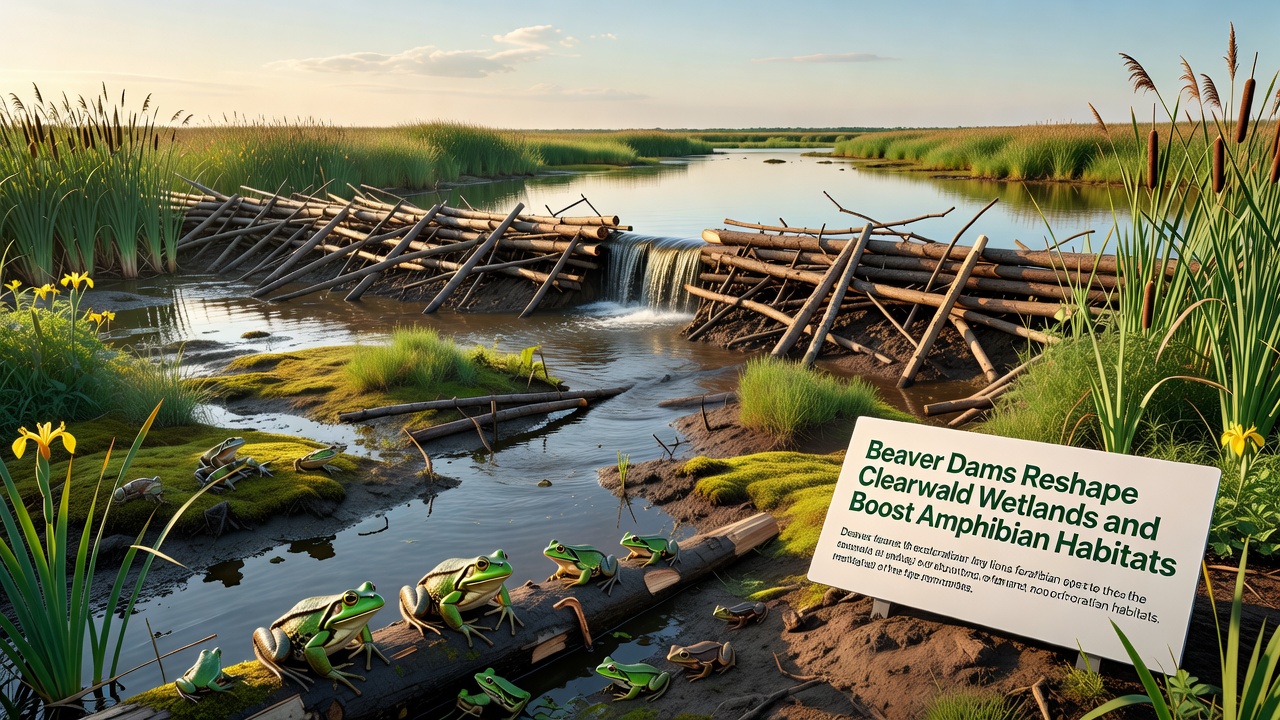
Amphibians such as frogs and salamanders utilize the shallow, vegetated margins of beaver ponds for egg deposition and larval development, where slower currents reduce the risk of eggs washing away. Survey counts from spring breeding seasons show higher densities of calling males and egg masses in dam-influenced pools than in unmodified stream segments. These sites often retain water long enough for tadpoles to reach metamorphosis even during drier summers.
Long-term monitoring programs have recorded stable or increasing numbers of several amphibian species in Clearwald wetlands where beaver colonies remain active. The added structural complexity from submerged logs and plant stems provides cover from predators, while the nutrient cycling stimulated by dam sediments boosts algal growth that sustains herbivorous larvae. November 2026 field reports from ongoing transects confirmed continued use of these engineered habitats by multiple species during late-season activity periods.
Broader Ecosystem Interactions
Other wildlife groups respond to the habitat modifications created by beaver dams, including waterfowl that nest along the expanded shorelines and mammals that forage in the new vegetation zones. Fish populations may benefit from deeper pool refugia during low-flow months, although passage barriers can limit movement for some species depending on dam height and design. Researchers continue to quantify these trade-offs through coordinated sampling across Clearwald's river systems.
According to information published by U.S. Geological Survey beaver ecology studies, similar dam effects have been observed in comparable temperate wetlands elsewhere, supporting the patterns documented locally. Complementary data from Canadian sources, including reports by Environment and Climate Change Canada, highlight how beaver engineering contributes to wetland resilience against seasonal variability.
Conclusion
Beaver dams continue to modify Clearwald wetland hydrology and create conditions that favor amphibian reproduction through expanded shallow-water habitats and improved vegetation cover. Ongoing measurements track these developments without assuming permanent outcomes, as beaver presence fluctuates with food availability and predation pressures. The documented physical and biological responses provide measurable examples of how one species' engineering activity influences wetland structure and supports associated fauna over time.